
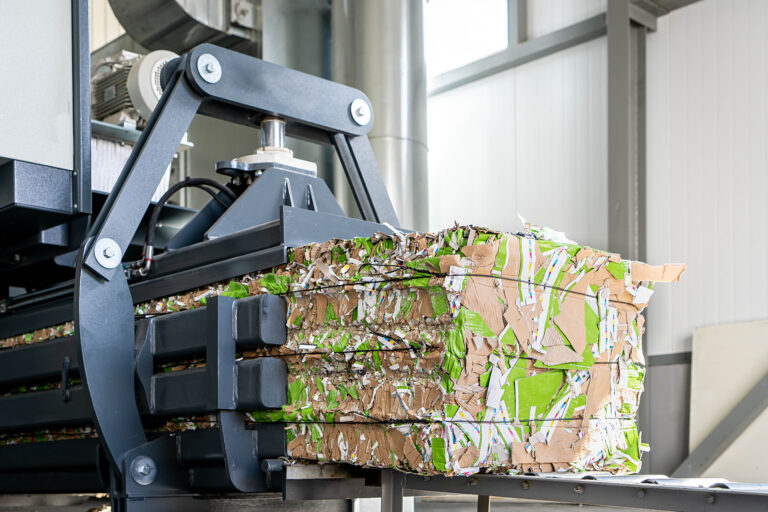
Recycling facilities often rely on older balers to compact waste materials like cardboard, plastic, and scrap. Over years of service, a baler’s original drive can become unreliable or inefficient. Motors burn out, the baler gearbox wears, and parts become hard to find. Rather than scrapping the entire machine, a practical solution is to retrofit a modern gear drive onto the existing baler. Upgrading the gearbox and motor assembly can revitalise the baler’s performance, increase throughput, and reduce breakdowns. However, retrofitting brings its own engineering challenges. With careful planning and the right gearbox, an ageing baler can have a new lease of life.
Industry/Application Challenges
Mechanical Fit and Alignment: The first challenge is mounting the new drive so it mates with the baler’s input shaft. Modern gearboxes may have different mounting bolt patterns or shaft positions from the old unit. A custom adapter plate is often required to secure the new gearbox in place. The gearbox output shaft must align precisely with the baler’s drive input. Otherwise, vibration and coupling strain increase.
Matching Speed and Torque: The retrofit must replicate the baler’s required performance. This means selecting a gearbox ratio and motor that deliver the same cycle speed and pressing force as before. If the new gear drive turns the baler’s mechanism too fast, it could overload components; too slow, and productivity drops. The baler gearbox also needs a high service factor, because balers create intense peak loads when compressing material. The new unit must withstand these shock torques.
Space Constraints and Weight: Many older balers have limited space for the drive assembly. A replacement gearmotor might be bulkier or heavier than the original. It must fit the available clearance, and the baler frame must support its weight. In some cases, choosing a right-angle gearbox helps accommodate the new drive in a cramped layout. Retrofit planning must also check that the new unit clears the baler’s moving parts and safety guards.
Planning a Baler Gearbox Retrofit
Retrofitting a baler with a new gear drive requires a well-planned approach. The process typically begins with assessing the baler’s requirements and constraints.
Planning and Selection: First, gather key data from the existing setup. You need the cycle speed, shaft dimensions, mounting layout and, if you are reusing it, the motor specification. With this information, choose a modern gearbox (and motor, if needed) that meets or exceeds the original performance. It’s wise to select a gear unit with a generous service factor for shock loads. I-MAK MA and MK monobloc gear units are worth considering here. I-MAK designs them for heavy loads on a continuous working cycle. They can be foot or flange mounted to match the machine.
Customisation and Mounting: Once a suitable gearbox is selected, the next step is to address the physical interface. In many cases, a fabricated adaptor plate lets the new gearbox bolt onto the baler’s frame or existing bolt holes. The gearbox output shaft must also match the baler’s input. This might need a new coupling or sprocket. Using a flexible coupling is generally recommended, as it can accommodate minor misalignments and reduce shock.
Installation and Alignment: During installation, align the gearbox output shaft carefully so it runs true with the baler’s drive input. Shim kits or adjustable mounts help you bring the shafts within the coupling maker’s alignment tolerance. Use the fixing grade, engagement and tightening values specified for the approved mounting arrangement. After installation, test the system slowly and check for smooth operation, abnormal noise or vibration.
Select the right heavy-duty gearbox, make the necessary adaptations and install it with precision. The upgraded baler can then keep serving reliably. A properly executed retrofit extends the baler’s useful life and improves its performance without the expense of a brand-new machine.
Key Product Features
Flexible Mounting Options: Modern industrial gearboxes used in retrofits often come with multiple mounting configurations and a standard motor interface. For example, the chosen gearbox might have both foot mounting points and side flanges. This lets it adapt to the baler’s existing mounting style. This flexibility reduces fabrication, because the gearbox can sit in whichever orientation best fits the old machine.
High Shock Load Rating: Baling creates heavy shock loads. The replacement baler gearbox therefore needs hardened gears and a higher service factor. Case-hardened, ground gear teeth and heavy-duty bearings help the unit cope with sudden force peaks as the ram compacts material. That depends on sizing it with the right service factor.
Compact & Robust Design: Space is usually tight on balers, so retrofit gear drives emphasise a high power density. A monobloc cast-iron housing provides strength in a relatively compact package. This robust one-piece design also means fewer bolts and joints that could loosen over time. Overall, the feature set focuses on delivering maximum performance and durability within the spatial limits of the legacy equipment.
Illustrative example: assessing an industrial baler retrofit
For a baler with an obsolete drive, first confirm how the gearbox connects to the machine and whether the problem is confined to the gearbox. Record torque, speed, operating cycle, peak loads, dimensions and the existing motor and protective arrangements.
A replacement I-MAK configuration can then be assessed against those requirements. An adapter plate or new coupling may be needed, but their stiffness, alignment, load capacity and access must be checked. Review any effect on guards, controls, stopping and overload protection before commissioning.
This is an illustrative assessment, not a reported recycling-centre installation. A newer motor or gearbox does not by itself establish lower temperatures, fewer stoppages or a longer machine life.
Conclusion
Retrofitting an existing baler with a modern gear drive can significantly increase its reliability and extend its useful life. Careful attention to mechanical fit, performance matching and gearbox quality saves operators the expense of a new baler. The key is to choose a robust industrial gearbox designed for heavy shock loads and to install it correctly.
Our team at Advanced Drives can help you select the right I-MAK gearbox and motor for your baler and plan the installation. With the right approach, an ageing baler can continue operating efficiently for many years.