

Dusty industrial environments, such as recycling plants and cement processing areas, pose unique challenges to gearbox longevity. Fine particles of dust and debris can get into machinery, coat cooling surfaces and mix with lubricants. All of these speed up wear and tear. Over time, this contamination can lead to overheating, premature bearing failure, and reduced efficiency of gear drives.
In waste recycling facilities, where conveyors and crushers generate constant dust, maintaining reliable gearboxes is critical to avoid costly downtime. A well-specified gearbox for dusty conditions must be robustly sealed against particle ingress and designed to dissipate heat effectively. By understanding these stresses and choosing the right protection, operators can greatly extend gearbox longevity in dusty environments.
Ensuring longevity in these harsh conditions requires careful attention to gearbox selection, installation, and maintenance practices.
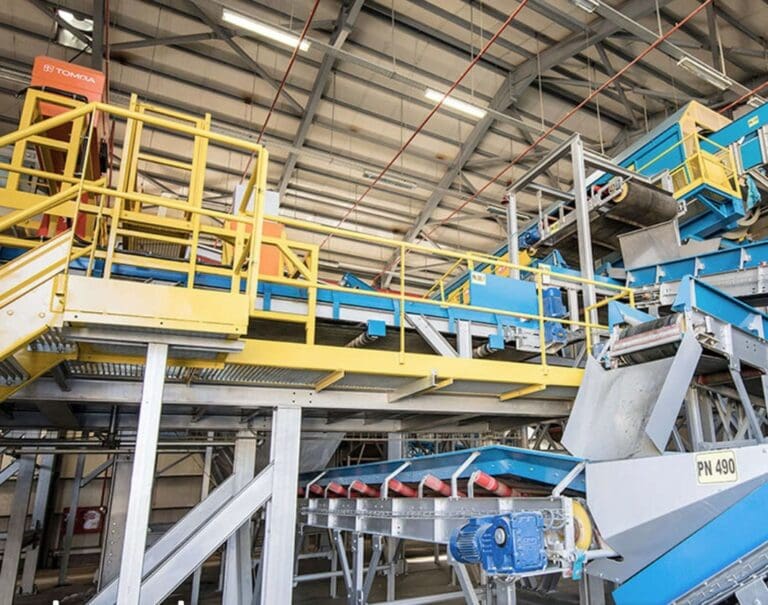
Industry/Application Challenges
Dust Ingress and Contamination: In dusty recycling facilities, airborne particles inevitably try to find their way into machinery. Standard gearboxes can suffer when fine dust penetrates seals. Once inside, dust mixes with gearbox oil to form an abrasive slurry that accelerates gear tooth and bearing wear. Over time, contaminated lubricant loses effectiveness, leading to higher friction and component damage.
Overheating Risks: Dust accumulation on a gearbox’s exterior surfaces and cooling fins acts as insulation. This buildup prevents efficient heat dissipation. Many industrial gear drives rely on air-cooled fins or fans. However, in a dusty environment these can clog, and operating temperatures then rise. Elevated heat further degrades lubrication and can shorten the life of seals and gaskets.
Maintenance Difficulties: Dusty conditions also make routine maintenance more challenging. Visual inspections are harder as layers of grime cover components, and identifying small leaks or cracks becomes difficult. Moreover, if gear units lack adequate sealing or filtration (such as breather filters), each maintenance interval risks introducing more particulates. These challenges collectively threaten gearbox longevity if not addressed through proper design and preventative measures.
How to Improve Gearbox Longevity
To ensure long service life in dust-laden settings, gearboxes must be engineered with enhanced protection and cooling capabilities:
Advanced Sealing: The first line of defence is superior sealing. Choose a motor with a high ingress protection rating. I-MAK motors are IP55 as standard, with IP65 and IP66 options. Pair it with a gear unit that has good shaft seals and a suitable breather. This often includes using double-lip oil seals or labyrinth seal designs on all shafts to keep contaminants out. Quality seals made of durable materials resist abrasion from gritty particles. In addition, gearcases with one-piece (monobloc) housings minimise the number of potential leak paths where dust could sneak in.
Filtered Breathers: Many industrial gearboxes are fitted with breathers to equalise internal pressure during heating and cooling. In a dusty environment, these breathers must be filtered. A fine membrane or filter on the breather cap allows air exchange but traps dust. This stops dust being drawn into the gearbox as it cools.
Cooling and Heat Management: Since dust can impair passive cooling, it’s important to consider thermal management. Over-specifying the gearbox (choosing a unit with higher thermal capacity than the basic requirement) provides a safety margin. Some applications use external oil coolers or forced ventilation to carry heat away. This helps when dust limits how well standard cooling fins work. Regular cleaning schedules (e.g. blowing off dust buildup) also help maintain cooling performance.
Manufacturers like I-MAK address these challenges in their gearbox designs. For example, I-MAK IR Series helical geared motors can be ordered with special seal arrangements and epoxy or anti-corrosion paint. These help them cope with dusty recycling plants. By choosing a solution specifically designed for dusty conditions, operators can significantly improve gearbox longevity.
Key Product Features
- Dust-Sealed Construction: Gearboxes for dusty environments feature construction elements specifically aimed at keeping contaminants out. This includes high-quality seals on the input and output shafts, often dual seals with an extra dust lip. Inspection covers are sealed too. Some models have a dust-tight breather or vent plug. Others run without a breather, using an expandable diaphragm to seal the case fully.
- High Thermal Capacity: A key feature is the ability to handle heat when dust impedes cooling. Look for gearboxes with enlarged surface areas or integrated cooling fins. Also consider units that can take auxiliary cooling fans or oil coolers. A gearbox with a higher thermal rating can run hard without overheating, even under a layer of dust.
- Rugged Materials and Coatings: Gears and bearings typically use high-strength alloy steels with surface hardening. Housings can be finished in epoxy or anti-corrosion paint to protect against moisture and corrosion. For example, a gearbox might come with an epoxy paint finish to protect against both moisture and fine particles.
Applications Where Gearbox Longevity Matters
Dust affects gearbox life in many sectors. Typical applications include:
- Recycling Conveyors: Sorting lines and incline conveyors carry paper fibre, plastic and fine dust past the drive all day.
- Shredders and Granulators: Shredding creates fine particles right beside the gearbox, along with heavy shock loads.
- Crushers and Screens: Quarries and glass recycling plants produce abrasive dust that wears seals quickly.
- Cement and Aggregates: Fine powders settle on housings and cooling fins, so heat management matters.
- Grain and Feed Handling: Elevators and augers in farm stores run in dust and, at times, in damp air.
Illustrative checks for dusty recycling applications
Conveyor feeding a waste-sorting line
If oil contamination is suspected, investigate its route into the gearbox before specifying changes. Check the approved breather arrangement, seals, maintenance practices and condition of the lubricant. A higher motor IP rating describes motor protection; it does not establish the gearbox’s resistance to dust ingress.
Glass-crusher drive
For abrasive dust, discuss suitable sealing and breather options with the gearbox manufacturer and ensure they fit the operating duty. Do not replace a required vent with a sealed plug. Include access for cleaning and inspections in the maintenance plan.
These are illustrative checks, not reported installations or promises of a particular service life. See our dusty-environment maintenance guide for related considerations.
Conclusion
In conclusion, operating gear drives in dusty environments need not result in early failures. Companies can keep critical machinery running reliably by choosing gearboxes with proper sealing and cooling, and by maintaining them well. In most dusty plants, the longer service life justifies the extra cost of better seals, breathers and cooling. If you’re facing gearbox reliability issues due to dust, consider consulting with our engineering team for tailored advice.
Advanced Drives can help you choose an I-MAK gearbox suited to your environment and application, so it gives the longest possible service life.