

A variable frequency drive (VFD) controls the speed of an AC motor; the gearbox provides the mechanical speed reduction and torque multiplication. Used with a suitable I-MAK geared motor, a VFD can match conveyors, mixers and other machinery to the process. The useful speed range, available torque and any energy saving depend on the complete drive system and its duty.
A variable frequency drive is an electronic controller that sets the speed of an AC motor. It does this by varying the frequency and voltage of the motor’s supply. Unlike a fixed-speed starter, it lets you dial in the exact speed a task needs. It also gives smooth acceleration and deceleration, and reversing if required.
I-MAK geared motors include the IR inline helical, YP parallel shaft and IRK helical bevel ranges. Confirm the selected motor’s suitability for inverter operation and the gearbox’s permitted speed and load before specifying a VFD.
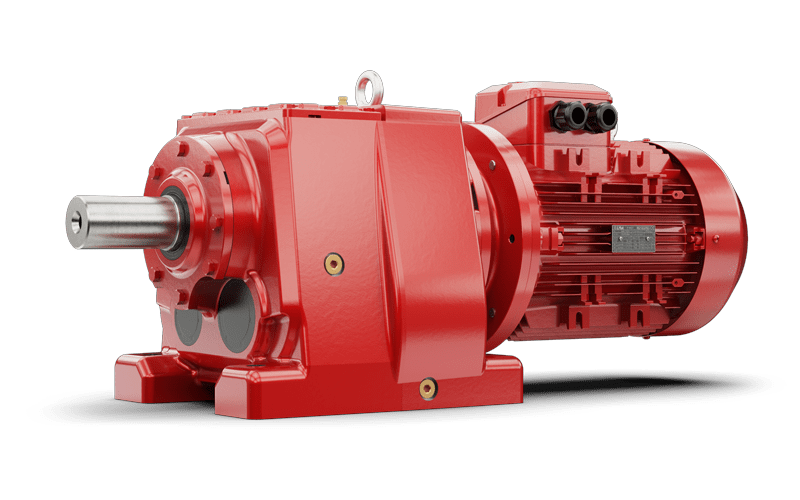
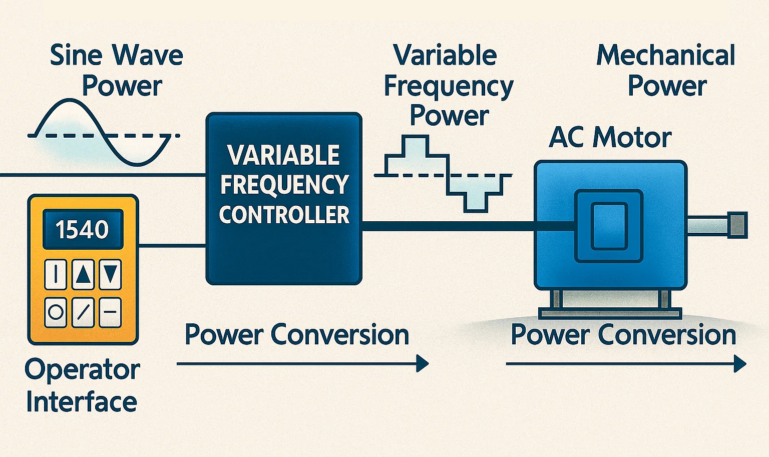
Diagram: in a basic VFD system, a variable frequency controller turns fixed-frequency AC power into variable-frequency power for an AC motor. The gearbox on the motor multiplies torque, while the VFD handles speed and acceleration.
Key Benefits of Variable Frequency Drives with I-MAK Gearboxes
The main benefit is control over the process. Energy use, mechanical loading and service life need to be assessed for the application.
Precision speed control and process quality
A VFD lets conveyor and machine speeds follow production requirements. The accuracy and response depend on the drive, motor, control mode and any feedback. Applications requiring precise positioning or synchronisation need a suitable motion-control arrangement, rather than an assumption that any VFD will provide it.
Energy savings
Energy savings depend on the load and operating pattern. Centrifugal pumps and fans can offer substantial savings when speed control replaces throttling or dampers. Their affinity laws describe an approximate cubic relationship between speed and power under suitable conditions; static head, system resistance and efficiency affect the actual result.
Do not apply that cubic relationship to a conveyor or other constant-torque duty. For a given torque, mechanical power changes in proportion to speed, while electrical consumption also includes motor and drive losses. Assess energy per unit of production and operating hours, as well as instantaneous power. Natural Resources Canada explains these load characteristics.
Application flexibility
With a VFD, one motor-gearbox unit can cover several speeds or duties. Operators can change speed set-points from the drive’s interface or an automation system, to suit different products or materials. For example, a packaging line’s I-MAK geared motor might run faster for small products and slower for large, fragile ones. Within the motor and gearbox ratings, you often need no separate gearboxes or changeovers, which saves time and money.
Soft start, soft stop and less mechanical stress
Appropriate acceleration and deceleration ramps can reduce abrupt changes in mechanical loading. The ramp times must suit the load and process. Benefits such as reduced spillage or wear are application-dependent, and a VFD does not guarantee longer component life or eliminate the need for maintenance.
Safety and reliability
Motor overload protection and machine safety are separate requirements. Some VFDs offer Safe Torque Off (STO), which prevents the drive from producing motor torque. STO does not provide electrical isolation, and the load may coast or move under external forces. The required stopping, braking and guarding measures must be determined for the complete machine. See Danfoss’s explanation of STO and its limitations, and use the instructions for the actual drive selected.
Common Applications for VFD-Controlled I-MAK Gearboxes
A VFD with an I-MAK geared motor adds value in many industrial applications. Common uses include the following.
Conveyors and material handling
Conveyors in warehouses, baggage handling and manufacturing can use a VFD to adjust speed and coordinate throughput. Check starting torque, loaded restarts and the required acceleration and stopping times. A speed change should suit the rest of the line, rather than simply moving a bottleneck elsewhere.
Mixers, agitators and blenders
Many mixers in food, chemical and pharmaceutical processing use geared motors for high torque at low speed. A VFD adds variable speed for different process stages and product viscosities. For instance, a dough mixer with an I-MAK gearbox can start slowly to fold in ingredients, then speed up for vigorous mixing.
This works well, provided the motor and gearbox are sized for the torque at the lowest speed. An external fan may also be needed if the motor runs slowly for long periods. Fine control of mixer speed improves consistency and lets one machine handle several products. Similarly, agitators can slow down to reduce splashing or foam.
Pumps and fans
For a centrifugal pump or fan, speed control can adjust output to demand. Compare the proposed operating points with the pump or fan curve and the system requirements. Minimum flow, pressure and the permitted speed range still matter; not every pump behaves as a variable-torque load.
Where a geared motor is required, select it for the full operating duty. Acceleration and stopping settings should be assessed for the system, including pressure transients where relevant, rather than assuming that soft starting will prevent water hammer.
Packaging machines and production lines
Packaging equipment often needs different speeds for different products, materials or process steps. With VFDs on I-MAK geared motors, fillers, labellers, wrappers and carton erectors can change speed on the fly. For example, a line can run slower for glass bottles and faster for plastic ones with a simple speed change, with no gear or pulley swap. This cuts changeover times.
For synchronised packaging equipment, check the required accuracy, feedback and communications before selecting the drive and control system. A basic speed-setting function may be sufficient for a conveyor but not for every indexing or positioning task.
Continuous torque at low speed
A self-ventilated motor’s cooling reduces as its shaft speed falls. A load that still requires substantial torque at low speed can therefore exceed the motor’s permitted continuous duty even though mechanical output power is lower.
Use the motor manufacturer’s inverter-duty loadability data for the selected motor, control method, ambient conditions and cooling arrangement. There is no universal minimum frequency that establishes safe continuous operation for every geared motor.
Fans and centrifugal pumps may require less torque as speed falls, but the actual system curve matters. Conveyors and other process loads may retain substantial torque demand. Classify the real load rather than assuming every mixer or conveyor behaves identically.
A separately powered fan can improve cooling, but does not by itself guarantee full rated torque at zero speed. Motor design, inverter control, current limits and feedback requirements still apply. Thermal sensors and the drive’s configured thermal model should form part of the agreed protection arrangement.
Check the gearbox at the same operating points
Very low input speed can affect splash lubrication, especially in particular mounting positions. Confirm the permitted range and any forced-lubrication requirement for the selected unit. Check torque, cold lubricant behaviour and duration at each operating point.
If the machine spends most of its time at a low output speed, a higher mechanical reduction may allow a more suitable motor operating speed. Recheck the maximum required output speed, input-speed limits and available torque before changing the ratio.
Above the motor’s base speed, available torque may fall as the drive enters field weakening. The gearbox, motor and machine must all suit the proposed upper speed.
For a selection enquiry, provide minimum, normal and maximum output speed, torque and duration at each point, ambient conditions, motor and inverter details, and any holding or braking requirement. This defines the operating envelope that needs approval.
What to check before selecting a VFD and geared motor
- Operating duty: the machine, minimum and maximum output speed, required torque, loaded starts and hours of operation.
- Motor and inverter: the motor nameplate, supply, inverter suitability, required control accuracy and feedback.
- Cooling: prolonged low-speed operation at high torque may require additional cooling. Confirm the motor’s allowable duty and available options with the manufacturer.
- Gearbox: the ratio, permitted input speed, output torque, mounting position and lubrication requirements across the proposed operating range.
- Stopping and safety: the load’s behaviour during a stop, braking requirements and the machine’s assessed safety functions.
- Environment: ambient conditions, enclosure protection and cleaning requirements. Our food and beverage sector page covers relevant drive applications.
For the available motor range and protection options, see I-MAK’s motor information. Application-specific limits should be confirmed for the selected configuration.
Discuss your drive requirements
Begin with the required output speed, torque and duty, then select the motor, gearbox and control arrangement together. This gives a sound basis for assessing control improvements and any energy savings.
Advanced Drives supplies I-MAK geared motors and can help assess the motor and gearbox for your application. Explore our I-MAK geared motor pages and industry pages, or send the existing nameplate details and operating requirements for a selection enquiry.
Contact our team with the required speed range, load and duty so we can discuss a suitable I-MAK motor and gearbox configuration.
Related guidance
Contact Advanced Drives about your application.