
A gearbox thermal rating addresses how much power a gear unit can transmit under specified conditions without exceeding its defined thermal limit. It answers a different question from the mechanical torque rating. A gearbox can meet the mechanical check and still need a separate assessment of heat under the intended duty.
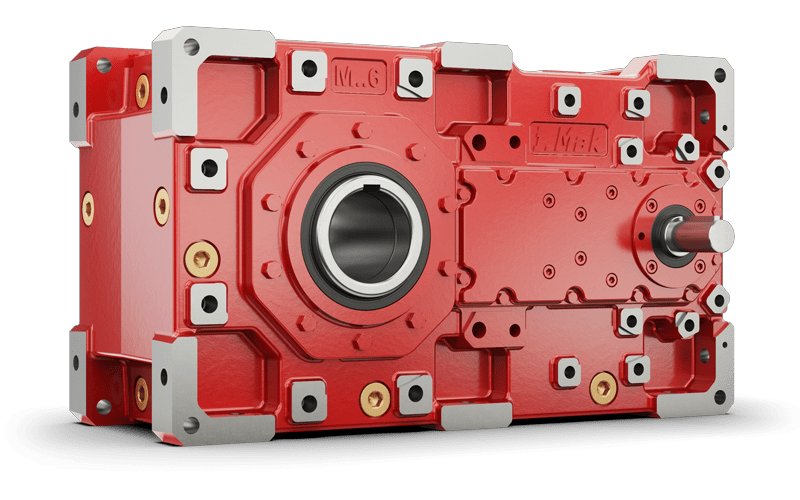
Mechanical and thermal checks serve different purposes
Mechanical selection considers whether the proposed assembly is suitable for the forces and torque associated with the duty. Thermal selection considers the balance between heat generated and heat dissipated. Both checks belong to the same selection, but a service-factor calculation does not automatically complete the thermal assessment.
Manufacturer guidance identifies the importance of ambient conditions, airflow, gearbox configuration, lubrication, cooling and the operating cycle. I-MAK’s MA/MK catalogue separately includes thermal-power information. Use the applicable data for the exact range and configuration; do not transfer a correction factor or temperature limit from another manufacturer’s method.
| Check | Question to resolve | Evidence to request |
|---|---|---|
| Mechanical suitability | Can the proposed size and configuration meet the running and peak loads? | Duty assessment, applicable torque limits and external-load checks. |
| Thermal suitability | Can it operate for the required cycle in the actual environment? | Thermal assessment with its ambient, mounting, lubrication and cooling assumptions. |
| Complete installation | Are the required conditions achievable on the machine? | Layout showing airflow, cooling connections, access and any installation restrictions. |
Describe the conditions around the gearbox
Record the expected ambient temperature range at the drive, not only the general building temperature. Show nearby heat sources, an enclosure or cover, direct sun exposure and anything restricting air movement. If the proposed drive is inside a machine guard, send the relevant part of the layout rather than assuming an open-air catalogue condition applies.
Describe how the machine spends its time: running, idling, starting, stopped and reversing. State the load and speed for each significant part of the cycle. An average power number without its time history can hide the operating conditions that the supplier needs to assess.
Check changes to speed, mounting or cooling
If a variable-speed drive is being added, specify the complete intended speed range and load at those speeds. Ask for the thermal implications for both the gearbox and the motor. The VFD application guide covers the wider coordination of motor, controls and gearing.
Do the same when moving the gearbox to a different mounting position or enclosing a previously open installation. Record any cooling equipment included in the selection, and establish its required connections and operating conditions. Cooling is part of the proposed assembly, not an unspecified accessory to add after a temperature problem appears.
A short thermal-assessment enquiry sheet
- Proposed gearbox type, size, ratio, input speed and mounting position.
- Running power or torque and speed, with cycle duration and stopped periods.
- Ambient range and a sketch or photographs of the installation.
- Lubricant specification and lubrication arrangement, where already known.
- Cooling equipment and services available at the site.
- Any operating conditions that differ from the original selection.
For an existing drive, include observations such as when a temperature increase occurs and whether the duty or environment has changed. Do not assign a universal acceptable surface temperature: the correct limit, measurement point and response belong to the equipment documentation and assessment.
For industrial duties, the A/AE and MA/MK ranges provide possible starting points. Send Advanced Drives the duty and installation details so the mechanical and thermal questions can be considered together before a configuration is confirmed.
Technical references
For the exact unit, use its confirmed drawing, applicable catalogue and operating instructions. The following references support the principles discussed here: