
Choosing material handling drives
Material handling drives work in two very different worlds. On one side are bulk operations such as quarries, mines, cement works and grain stores, where conveyors carry stone, sand, minerals and grain for long hours in dust and weather. On the other are factories and warehouses, where roller conveyors, transfer lines and hoists move parts and products around a building.
Advanced Drives is the official UK supplier of I-MAK gearboxes, geared motors and motors. This guide explains which I-MAK ranges and options suit material handling drives.
The challenges of moving material
Bulk handlers such as conveyors and bucket conveyors often operate in dusty, harsh conditions, and factory systems have their own demands. The common ones are:
- Downtime is costly. One stopped conveyor can halt a whole plant or loading operation.
- Dust and grit. Abrasive dust gets everywhere and works against seals and bearings.
- Shock loads. Lumps of rock, uneven feeding and loaded starts put sudden torque on the drive.
- Long hours. Many conveyors run two or three shifts a day.
- Outdoor exposure. Rain, frost and sun all affect paint, seals and oil.
- Access. Head drives can be hard to reach, so maintenance needs to be simple.
- Application needs. Inclined conveyors must not run back when they stop, and hoists need brakes.
Choosing an I-MAK range
The right range depends mainly on the layout of the machine and the torque it needs.
Shaft mounted helical: IRNX and IRO
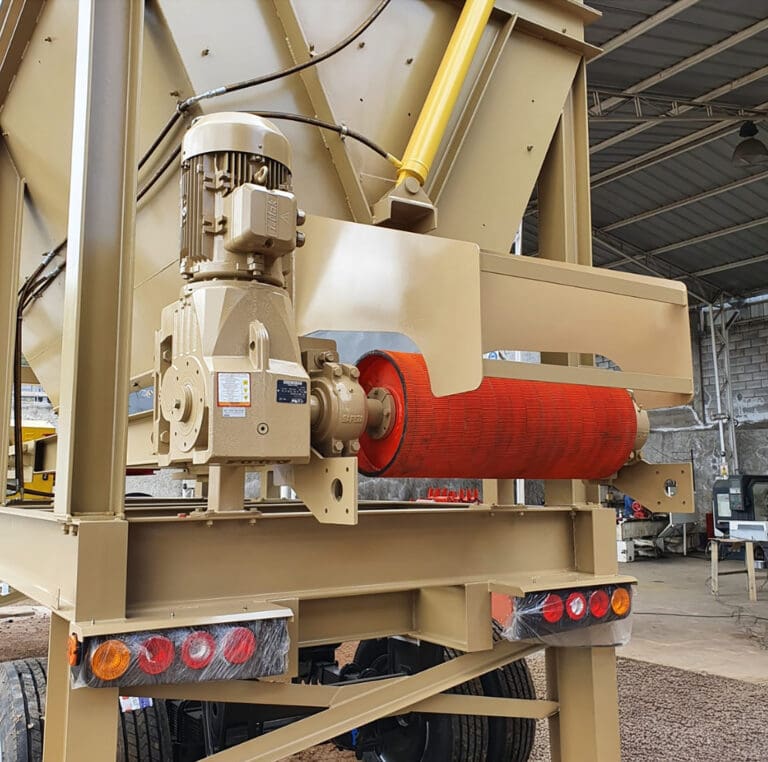
For heavy duty belt conveyors, we supply shaft mounted helical gearboxes such as the IRO and IRNX ranges, with a torque arm and an optional backstop. A shaft mounted unit slides straight onto the conveyor’s drive pulley shaft, and its torque arm stops it rotating, so there is no separate coupling or baseplate to align.
- IRNX: I-MAK calls it the best solution for conveyors and grain storage. It names belt, bucket and screw conveyors, apron feeders, roller beds and mixers. There are 12 sizes from 515 to 42,700 Nm, with hollow shafts from 30 to 190 mm, driven by a belt from motors of 0.37 to 450 kW.
- IRO: I-MAK names it for inclined conveyors in quarries and mines. It covers 930 to 7,530 Nm in 11 sizes.
Both use rubber rings as the torque arm to absorb shock and vibration, and I-MAK designs both for easy cleaning and dust resistance.
Inline helical: IR
The IR is an inline helical geared motor, with the output shaft on the same axis as the motor. I-MAK names it for conveyors and material handling equipment. It covers 85 to 18,000 Nm and 0.12 to 160 kW, in foot or flange mounted versions.
Parallel shaft: YP
The YP is a parallel shaft helical geared motor with a hollow output shaft as standard, so it can fit directly onto a roller or pulley shaft. I-MAK describes it as perfect for conveyors and hoist drives. It covers 130 to 18,000 Nm and up to 200 kW.
Helical bevel: IRK
Where a right angle drive suits the layout better, the IRK helical bevel geared motor covers 160 to 18,000 Nm and up to 200 kW.
Options for material handling drives
Backstops and brakes
Backstops are options, not standard fittings. On the IRNX and IRO, a backstop bearing stops a loaded inclined conveyor running back when it stops; you order it for the free direction of rotation, clockwise or anticlockwise. Motor options include a backstop and brakes, with hand release and double brake versions.
Dust and weather protection
For the gear unit, options include special seal configurations, an output cover and suitable paint and lubricant systems. I-MAK motor protection options include IP55, IP56, IP65 and IP66, with a canopy available for outdoor motors. Confirm the gearbox’s protection and the complete drive’s ambient limits separately: neither the motor IP rating nor the cold-oil option applies automatically to the whole assembly.
Sizing for shock loads
We size helical and bevel units with a high service factor for shock prone duties. The IRNX tables, for example, give the maximum motor power for light, moderate and heavy duty at 8, 16 and 24 hours a day.
Easier maintenance
Keep the specified oil fill, drain and vent points accessible, and check oil level, leakage and fixing condition. Set maintenance and oil-change intervals from the manual for the actual range, mounting and lubricant. Our gearbox maintenance guide explains how to build a duty-based routine.
Example scenarios for material handling drives
These examples are hypothetical and show how we would approach each duty.
- Quarry conveyor belt: a long overland conveyor in a quarry uses a shaft mounted helical gearbox, such as an IRO, with an optional backstop for the inclined section. The rubber ring torque arm takes the shock from heavy rock, and an outdoor paint system protects the housing.
- Warehouse roller conveyor: a YP parallel shaft geared motor fits straight onto the drive roller shaft through its hollow output, keeping the drive compact beside the line.
- Grain store bucket conveyor: an IRNX drives a bucket conveyor feeding a silo, with a backstop bearing ordered for the right direction. Fitted with a special seal configuration and an output cover, it helps keep grain dust out and oil in. Where the area is classified for combustible dust, explosion-proof motor options are available, with certification confirmed with I-MAK for the exact unit.
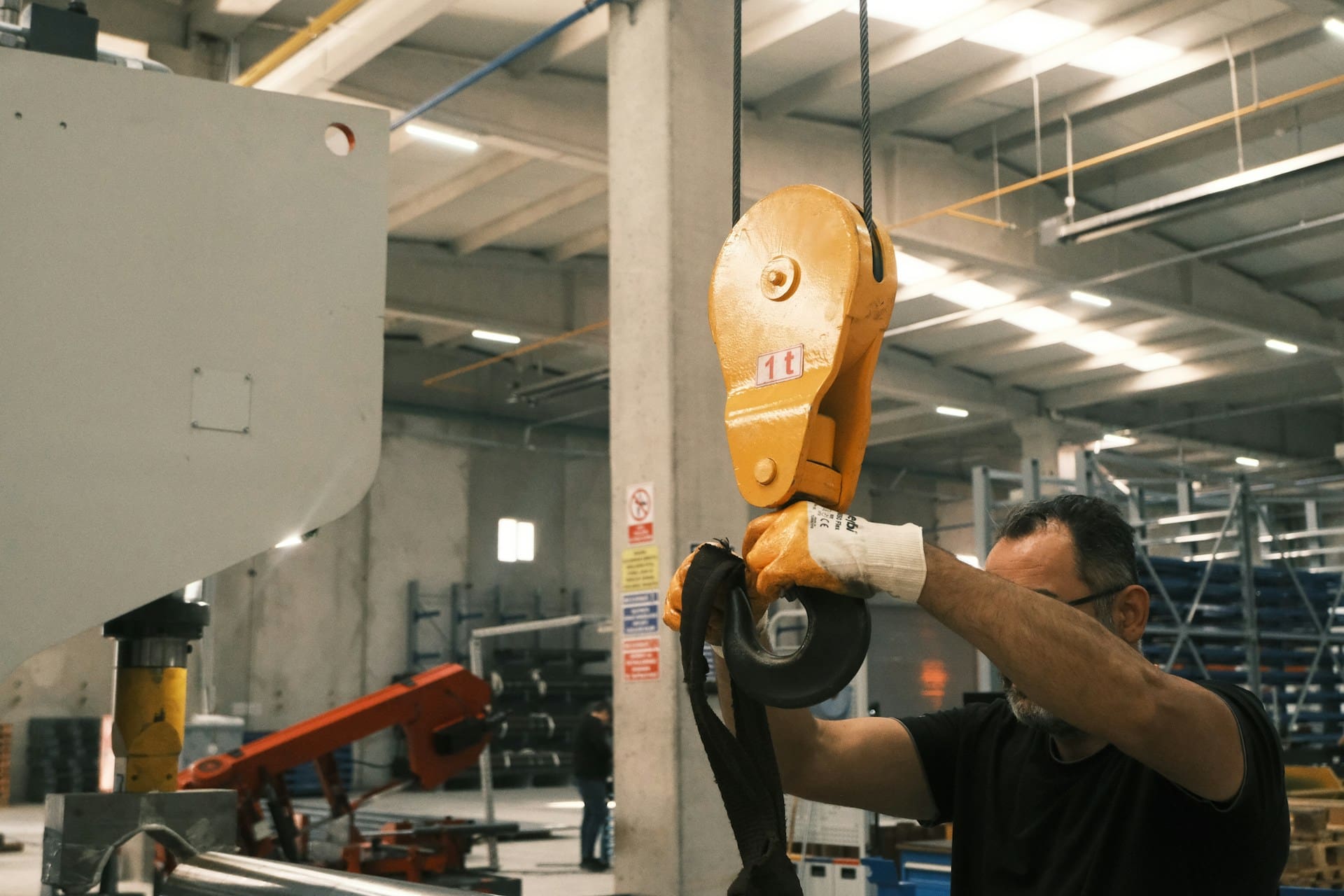
- Overhead factory hoist: an electric hoist on a factory crane uses an I-MAK IRC hoist drum drive with a brake motor. The brake and the system design hold the load, and the hoist must be designed and certified to the relevant lifting standard.
Frequently asked questions
What is the difference between the IRNX and the IRO?
Both are shaft mounted helical gearboxes with a rubber ring torque arm and a backstop option. The IRNX is belt driven and covers a wider torque range, up to 42,700 Nm. The IRO covers 930 to 7,530 Nm and is the range I-MAK names for inclined conveyors in quarries and mines.
Is a backstop fitted as standard?
No. A backstop is an option, ordered for the direction the conveyor runs. Tell us the direction of travel and we will include it.
What IP rating do the gearboxes have?
Confirm protection for the exact gearbox and motor configuration. The motor’s IP rating is not an assembly-wide rating. For dusty or wet sites, check the gearbox documentation, seals, covers, paint and installation requirements as well as motor protection.
Can you supply drives for areas with combustible dust?
I-MAK offers explosion-proof motor options. Certification must be confirmed with I-MAK for the exact unit, so send us your site’s hazardous area classification and we will check what is available.
How often does the oil need changing?
Use the operating manual for the installed range and lubricant. Different ranges can have different running-in and subsequent intervals, so a single 500-hour or 6,000-hour rule should not be applied to all material-handling drives. Keep regular oil-level, condition and breather checks in the maintenance plan.
Talk to Advanced Drives
By combining I-MAK gear units with the right options for each application, we help you reduce downtime. Tell us the machine type, the torque or power, the speed, the running hours and the site conditions, and we will recommend a suitable drive. Contact Advanced Drives to discuss material handling drives for your site.