
Gearbox preventative maintenance starts with the instructions for the exact unit, its operating duty and a record of its normal condition. For a high-torque drive, the priorities are suitable lubrication, clean cooling surfaces and breathers, sound mounting and early investigation of changes in noise, vibration or temperature.
A maintenance programme can help identify deterioration and plan repairs. It cannot guarantee that a gearbox will never fail, and one oil-change interval or inspection timetable will not suit every range and application.
Build the maintenance record around the installed unit
Record the gearbox model and serial number, ratio, mounting position, lubricant specification, fill quantity and commissioning date. Add running hours, starts, load pattern, ambient conditions and the relevant manual revision. Keep previous service reports, oil-analysis results and any changes to the drive.
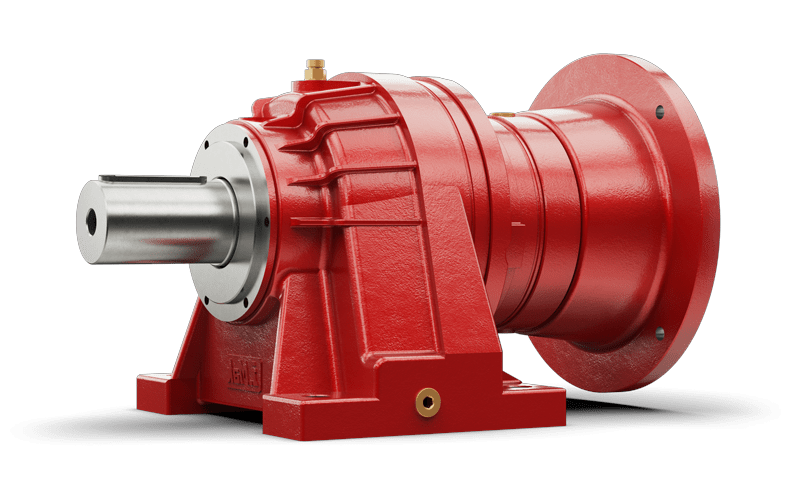
This matters particularly where a plant operates several gearbox types. Instructions for a helical unit should not automatically be applied to an IPR or IPRK planetary gearbox or a unit with a separate lubrication circuit.
Separate observation from hands-on maintenance
Operators can record observations from designated safe positions, such as a change in sound, a visible leak or an instrument reading. Work involving guards, plugs, couplings or inspection covers requires the machine’s safe maintenance procedure, competent personnel and control of stored energy. HSE explains the need to prepare equipment and secure its energy isolation.
Plan access, support of loads and the condition in which an oil level must be checked using the manufacturer’s instructions. Do not open a hot or pressurised gearbox or investigate moving components on the strength of a general online checklist.
What the maintenance plan should cover
- Lubrication: specified oil, correct level for the mounting position, leaks, contamination and the condition of any lubrication circuit.
- Breathers and cooling: contamination around vents, clean external surfaces and operation of fitted fans, pumps or coolers.
- Mounting and connections: gearbox fixings, torque arms, couplings and alignment, checked using the relevant tolerances and tightening instructions.
- Condition readings: temperature, vibration and noise compared with a baseline taken under comparable load and speed.
- Protective equipment: inspection of brakes, backstops, sensors and torque limiters where fitted, according to their own instructions.
Set inspection frequencies from the manufacturer’s requirements, operating conditions and the consequences of failure. A dusty, heavily loaded drive may need a different plan from an intermittently used unit in a clean area. Specify who records a finding, who reviews it and what requires the machine to be taken out of service.
Oil changes and condition monitoring
I-MAK’s IR, YP and IRK operating guide specifies an initial oil change after 500 operating hours and subsequent changes every 6,000 hours. Treat that as guidance for those covered units, not a universal interval for all I-MAK products. Confirm the instructions supplied with the actual gearbox and any requirements arising from its lubricant and conditions.
Oil analysis is most useful as a trend with a consistent sampling method and a record of oil additions or changes. Wear particles or contamination warrant investigation, but one result alone does not identify a particular failed bearing. Temperature and vibration readings also need interpretation alongside load, speed and operating history.
Use the limits specified for the unit and lubricant. Avoid applying a single temperature alarm or oil-change rule across unrelated gearboxes. Keep a record of the finding, investigation, corrective work and subsequent readings.
Illustrative example: a shredder drive with rising temperature
Suppose a shredder gearbox’s temperature rises above its usual level under a comparable load. The maintenance team follows the site’s response procedure and checks the permitted operating limits. Once the machine is made safe, the investigation can consider lubricant condition, cooling equipment, contamination and changes in load.
The result determines the corrective action and whether specialist inspection is required. A sensor supplies evidence; it does not establish the cause or guarantee that damage has been prevented. This is an illustrative maintenance scenario, not a reported customer incident.
Request the right maintenance information
Contact Advanced Drives with the nameplate, mounting position, lubricant details, operating history and symptoms so we can help identify the relevant I-MAK documentation and support requirements. For related checks, see maintenance in dusty environments and gearbox overload protection.
Manufacturer reference: I-MAK IR, YP and IRK operating guide. Follow the documentation for the installed unit.