

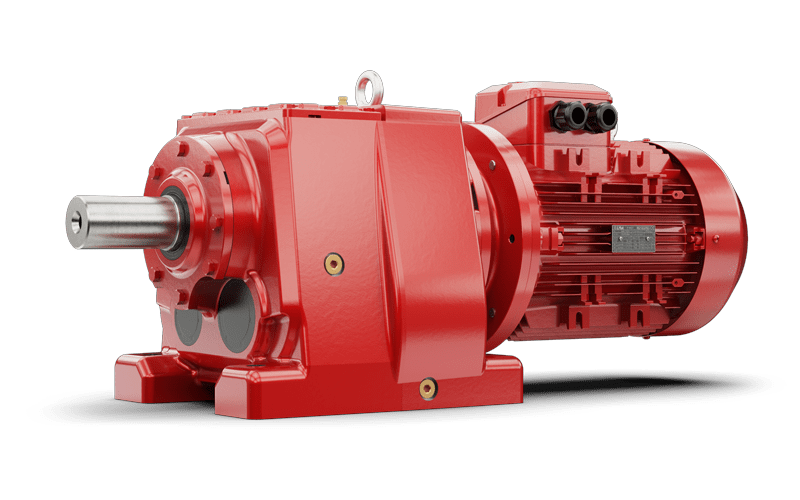
Gearboxes in material handling equipment, such as conveyors, mixers and hoists, can be mounted in various orientations. You might see gear units bolted horizontally on a base plate or fixed vertically to a wall. Some even hang upside down under a conveyor. Standard codes identify these mounting positions, such as the IEC codes B3, B5 and V1. I-MAK catalogues use their own P and V position codes. Understanding gearbox mounting positions and their implications is important for system designers and maintenance teams. The way a gearbox is mounted can affect its lubrication, cooling, accessibility for service, and integration with other components. This guide explains common gearbox mounting positions and how each orientation affects performance and maintenance in material handling systems.
Industry & Application Challenges
Lubrication and Cooling Concerns: Gearboxes rely on oil inside to lubricate gears and bearings. When you change the mounting position, the internal oil distribution changes too. For example, a gearbox designed to sit horizontally has its oil sump at the bottom. Stand it on its end, and some critical parts may no longer sit in oil. A non-standard orientation can starve some areas of oil, or cause overheating if oil circulation suffers. Manufacturers often specify allowable mounting positions and may require different oil fill levels or additional provisions for certain orientations. If these guidelines are not followed, the gearbox could suffer premature wear due to oil starvation.
Access and Installation Issues: Each mounting style brings its own practical challenges. A foot-mounted gearbox (horizontal) is typically easy to service – drain plugs, breathers, and fill ports are in convenient spots. However, if the same unit is wall or flange mounted vertically, those service points may be hard to reach. Installing a heavy gearbox in an unusual orientation can also be tricky. For instance, fitting a large shaft-mounted gearbox overhead, under a conveyor, needs careful alignment and often extra support. Different mounting positions can also impose different loads on the gearbox housing. If not mounted on a properly flat, supported surface, the casing might distort slightly. Plan for the demands of each mounting position. That way, you avoid misalignment, awkward maintenance access and strain on the gearbox.
Best Practice for Gearbox Mounting Positions
To deal with different mounting positions, consider the following best practices:
- Follow Manufacturer Guidelines: Always check the gearbox manufacturer’s documentation for mounting position information. Most give specific instructions. For example, horizontal position B3 may take the standard oil fill. Vertical position V5 may need extra oil and a different breather location. Identify the intended orientation (by its code) and confirm the gearbox model supports it. Some smaller gearboxes can be mounted in any orientation with no changes. Larger units, however, often have set orientations or need special kits for some positions.
- Adjust Lubrication and Vents: When a gearbox is mounted other than horizontally, you may need to change how it’s lubricated. Vertical mounts typically need more oil to ensure all gears and bearings receive oil. Relocate the breather vent to the new highest point of the gearbox so that pressure equalisation works without leaking oil. If the output shaft faces downward, consider a drywell design. This sealed cavity stops oil leaking through the lower seal. Very large or critical units may need an auxiliary lubrication system. An electric pump then circulates oil to the upper components.
- Plan for Mounting and Maintenance Access: Design your system with mounting accessories that suit the orientation. For instance, a shaft-mounted gearbox on a conveyor needs a proper torque arm to resist its reaction force. Allow a little float to avoid stress. When mounting a gearbox vertically on a wall or frame, use the lifting eyes provided. Make sure the flange or feet are fully supported, so the casing does not distort. Think ahead about service points too. If the standard drain will be out of reach, choose a gearbox with alternative drain plugs or fit an extension pipe. Tailor the installation to the mounting position, with secure support, correctly placed service ports and proper alignment. You will then avoid problems later.
Key Product Features
Multiple Oil Port Options: Most industrial gearboxes are built with mounting flexibility in mind. They include multiple threaded ports for breathers, oil fills, and drains on different faces of the housing. This lets you configure the gearbox for various orientations. You can move the breather to the highest point and use whichever drain plug ends up lowest. A gearbox sold as “suitable for any mounting position” usually has these extra ports. It may also have internal channels so oil still reaches every area.
Vertical Mount Adaptations: Some gearboxes come with special features for vertical mounting. One example is a drywell design. When the output shaft faces downwards, a secondary cavity and seal at the lower output bearing stop oil seeping down the shaft. This feature is common in gearboxes for vertical conveyors or mixers. It is equally useful in other material handling drives. Some vertical designs also use slinger discs or oil pick-up tubes to carry oil to the upper bearings. Gearboxes with such provisions can be deployed vertically without additional modifications.
Illustrative example: changing a gearbox’s orientation
Suppose an existing conveyor drive is being considered for installation with its output shaft facing upwards. Before moving it, identify the exact model and ask the manufacturer to confirm whether that position is permitted.
Check the specified oil quantity, level-checking method, plug locations and any required lubrication adaptations. Mounting codes differ between manufacturers and ranges, so use the drawing for that unit. Do not assume that adding oil or relocating a breather makes an otherwise unsuitable orientation acceptable.
This is a planning example, not a reported bearing failure or a complete conversion procedure. Record the approved configuration for future maintenance and replacement enquiries.
Conclusion
Gearboxes are versatile, but their mounting position matters more than many people realise. Understand what each orientation means and make the right adjustments. You will then avoid lubrication issues, difficult maintenance and early failures. Always check the manufacturer’s specifications when planning an installation. For non-standard mounts, use the breather, fill and drain positions they specify. With the proper precautions, your gearbox will deliver reliable performance in any orientation.
If you’re unsure about mounting a gearbox a particular way, contact Advanced Drives for advice. We can help you choose an I-MAK gearbox model, mounting position and oil fill that suit your layout.