

Farmers rely on a wide range of machinery, from tractors and harvesters to grain augers and feed mixers. Each machine needs the right gearbox to work reliably. Selecting an appropriate gearbox for farm equipment is crucial because agricultural duty cycles and conditions are so demanding. Gear drives on farm machinery face high torque loads, such as heavy implements working through soil. They also take shock loads when equipment hits rocks or rough ground. In addition, dust, mud and weather attack them. Choosing the wrong gearbox can lead to breakdowns at the worst possible times (for example, during harvest). This practical buying guide explains how to choose the right gearbox for farm machinery. It covers load requirements, terrain, PTO compatibility and layout constraints.
Industry & Application Challenges
The agricultural environment poses several challenges for gearboxes. A key factor is the wide variety of equipment. A tractor’s rotary tiller needs a very different gearbox from a grain auger or a feed mixer. Farm gear drives must handle high torque and shock loads. For instance, when a plough hits a rock or a baler jams, the sudden jolt strains gears and shafts. They also endure harsh outdoor conditions: persistent dust, mud, rain, and big temperature swings. Without proper protection, standard gear units can quickly suffer from lubricant contamination, seal failure, or corrosion in such conditions.
PTO compatibility is another consideration. Many implements run off a tractor’s power take-off shaft, often at 540 or 1000 rpm. Any gearbox in a PTO-driven set-up must fit the standard spline. It must also convert that input speed into the output speed and torque the implement needs. Additionally, farm machinery often works in remote fields far from a workshop. Gearboxes should therefore be robust, low-maintenance and easy to service on site. Taken together, a gearbox for farm machinery must be versatile, extremely durable and forgiving of rough use and infrequent maintenance.
How to Choose a Gearbox for Farm Machinery
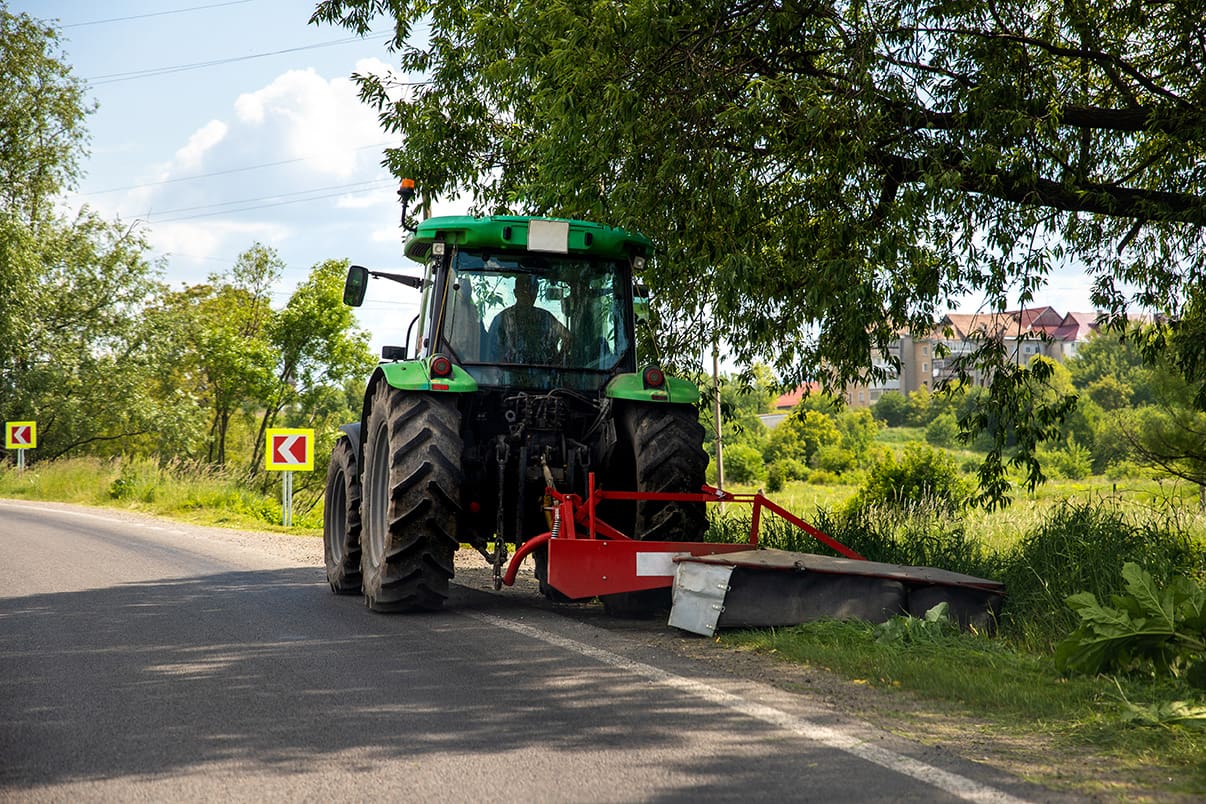
Choosing the right gearbox for farm machinery starts with understanding the application’s requirements. First, determine the torque and power needed. Calculate the load the machine must move or drive, and add a safety margin for shock loads. Next, match the gearbox type and layout to the machine. Some machines need the input and output at a right angle, as in PTO-driven rotary cutters or mixer wagons. These need a bevel or other right-angle gearbox. If space allows an inline drive, a coaxial helical gearbox (such as I-MAK’s IR Series) may be ideal. If the motor needs to sit beside the driven shaft, a parallel shaft helical gearbox (the YP Series) is a compact choice.
Always consider the service factor or duty rating. Farm equipment sees irregular and peak loads, so choose a gear unit rated above the calculated requirement. Select the service factor using the manufacturer’s load-class and operating-duty method, and check peak loads separately. A value of 1.5 is not a universal durability guarantee.
Environmental protection is also critical. Specify a motor with a suitable ingress protection rating; I-MAK motors are IP55 as standard, with IP66 as an option. Add suitable seals to keep out dust and water. If fertiliser or manure is likely, ask for an anti-corrosion paint system and talk to us about special shaft materials.
For PTO-driven applications, use gearboxes or adapters that mount directly to standard PTO splines. This ensures a proper fit and efficient power transfer from the tractor. Finally, plan for maintenance. Choose reliable gear drives with accessible points for oil checks and greasing. In practice, an experienced supplier can help you select the right I-MAK gearbox model. That way, the unit meets the load, fits the machine’s layout and withstands tough farm conditions.
Key Product Features
Gearboxes designed for agricultural use include special features that enhance reliability and ease of maintenance. I-MAK gear units used on farm machinery offer:
- Rugged design: Sturdy cast iron housings and hardened steel gears give these gearboxes the strength to endure shock loads. Reinforced output bearings are an option for high forces, such as a loaded conveyor or the impact from a rotary cutter.
- Enhanced sealing: To cope with dust, mud and rain, special seal options are available. I-MAK motors are IP55 as standard, with IP66 as an option. This keeps abrasive grit and moisture out of the gearbox oil in field conditions.
- Modular configuration: Many units offer several input and mounting options. The same gearbox can come with a motor, an IEC motor flange or a plain input shaft. Flexible mounting (foot-mounted, flange-mounted or shaft-mounted with a torque arm) allows easy integration into different machine layouts.
- Maintenance-friendly features: These gearboxes have accessible oil fill and drain plugs with protective caps. The oil level is easy to check. The vent (breather) plug and oil plugs are easy to reach for routine checks. Such features mean routine lubrication and inspections can be done swiftly on-site, minimising downtime.
Illustrative farm-drive selection scenarios
These examples describe selection questions, not reported customer installations.
Grain auger with a PTO input
For an auger that runs hot during harvest, establish the cause before selecting a larger gearbox. Record PTO speed, required auger speed and torque, running hours, overload protection and the shaft and guarding arrangement. Check mounting, lubrication and contamination as well as the mechanical rating. An industrial unit should not be assumed to fit or suit a PTO-driven machine without those checks.
Flail mower exposed to impact loads
Repeated damage calls for an assessment of the mower’s impact loads, drive layout and protective devices. A higher gearbox rating alone does not address a jam or impact. Use the machine manufacturer’s requirements to establish an acceptable replacement and retain the intended guarding and protection.
Conclusion
Selecting the right gearbox for farm machinery is an investment in uptime and safety. Consider load, layout and the environment, and choose gearboxes built for agricultural duty. That way, operators avoid costly breakdowns in critical seasons. A well-chosen drive unit keeps your equipment running reliably when it matters most.
For more guidance on specifying the optimal farm gearbox, or to explore robust options like our YP Series Parallel Shaft Gearboxes for agricultural applications, please contact Advanced Drives. Our team is ready to assist with expert advice and dependable drive solutions.