I-MAK IRS Series Worm Geared Motors
Cast iron worm gearboxes to 10,562 Nm, with motors to 22 kW.

Cast iron worm gearboxes to 10,562 Nm, with motors to 22 kW.
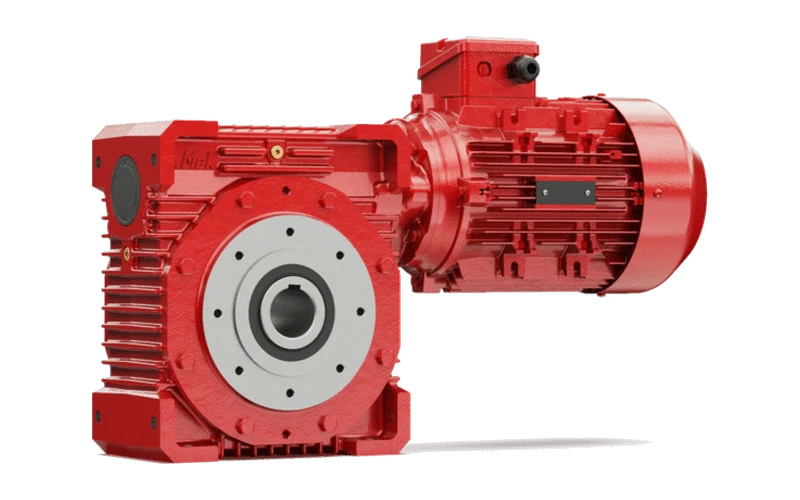
Eight sizes of worm gearbox and geared motor, with a cast iron housing and a hollow output shaft as standard. Genuine I-MAK units, supplied and supported from Silsden, West Yorkshire.
10,562Nm
Output torqueIRS 250 gear unit at 1,400 rpm input; 13,226 Nm at 900 rpm.
22kW
Motor powerFrom 0.25 kW, or 0.12 kW with a combined unit.
8sizes
Housing sizesFrom IRS 52 up to IRS 250.
5,000:1
Ratio rangeFrom 7.25:1, with a combined unit for the highest ratios.
Overview
The I-MAK IRS series turns the drive through 90 degrees with a single worm and worm wheel stage, giving high ratios and low output speeds from one housing. Eight housing sizes cover gear unit ratings up to 10,562 Nm, and the IRS is also supplied as a geared motor from 0.25 to 22 kW.
The housing is cast iron in every size, and I-MAK lists low vibration and a wide choice of mounting positions among the series’ strengths. Ratios run from 7.25:1 to 115:1 in a single housing; with an S or IRS worm unit, or an IR helical unit, ahead of it, a combined unit reaches 5,000:1.
A hollow output shaft is standard, with solid shafts and output flanges as options, so an IRS can be foot mounted, flange mounted or hung on the driven shaft with a torque arm. I-MAK also offers the IRS where a strong backstop is needed: with the backstop option, it suits drives that must not run back, such as inclined conveyors.
Advanced Drives is the official UK supplier of I-MAK gearboxes and motors. For background on how this type of gearbox works, read our guide to worm gearboxes.
Which I-MAK gearbox?
Key advantages
Eight housing sizes, rated up to 10,562 Nm at 1,400 rpm input, and 13,226 Nm at 900 rpm.
A strong cast iron housing in every size, from IRS 52 to IRS 250.
Ratios from 7.25:1 to 115:1 from a single worm stage give low output speeds from a standard motor.
On IRS 82 to IRS 201, an S or IRS worm unit, or an IR helical unit, ahead of the IRS takes the ratio up to 5,000:1.
Foot or flange mounted, or hung on the driven shaft with a torque arm, in a choice of mounting positions.
A first oil change after 500 hours, then one every 6,000 operating hours.
360° view
↻ Click and drag to rotate
Technical data
Eight housing sizes, each available as a gearbox or a geared motor. The torque figures are I-MAK’s ratings at a service factor of 1, for an input speed of 1,400 rpm and of 900 rpm; the right size for your machine depends on its load, hours and starts, and we check that for you.
| Size | Rated torque at 1,400 rpm input (Nm) | Rated torque at 900 rpm input (Nm) | Ratio range | Gear unit weight, foot / flange (kg) |
|---|---|---|---|---|
| IRS 52 | 152 | 173 | 7.25 to 62 | 9 / 11 |
| IRS 65 | 280 | 317 | 7.5 to 82 | 14 / 15 |
| IRS 82 | 565 | 648 | 7.5 to 62 | 24 / 26 |
| IRS 102 | 999 | 1,170 | 7.5 to 82 | 39 / 43 |
| IRS 127 | 1,792 | 2,216 | 10 to 83 | 69 / 73 |
| IRS 162 | 3,352 | 4,052 | 7.5 to 111 | 163 / 186 |
| IRS 201 | 5,761 | 7,237 | 7.5 to 115 | 300 / 332 |
| IRS 250 | 10,562 | 13,226 | 7.75 to 63 | 493 / 513 |
| Common to every size | IRS series |
|---|---|
| Gearing | A single worm and worm wheel stage |
| Housing | Cast iron |
| Motor power | 0.25 to 22 kW; from 0.12 kW with a combined unit |
| Ratios | 7.25:1 to 115:1; up to 5,000:1 with a combined unit, IRS 82 to IRS 201 |
| Output speed | 12 to 193 rpm at 1,400 rpm input |
| Efficiency | 54 to 89% at 1,400 rpm input, lower at higher ratios |
| Output | Hollow shaft as standard; solid shaft and output flange options |
| Mounting | Foot or flange mounted, or shaft mounted with a torque arm; positions P1 to P6 and V1 to V6 |
| Ambient temperature | Gear unit +5 to +60 °C, standard motor 0 to 40 °C; ask us outside these ranges |
| Lubrication | CLP gear oil, mineral or synthetic, chosen for the operating temperature |
| Oil changes | After the first 500 hours, then every 6,000 operating hours |
| Standard motor | IE3, IP 55, insulation class F, 400 V 50 Hz |
Torque ratings, ratios, efficiencies and weights are from I-MAK’s worm gear unit performance tables at a service factor of 1; weights are for the gear unit without a motor. Source: I-MAK S, IRS and IRSD catalogue 2025, Rev.00, and the I-MAK operating guide for the S, IRS and IRSD series.
Applications
I-MAK offers the IRS for drives that need a high ratio, and for drives that need a strong backstop. That suits slow-running machines driven from a standard motor.
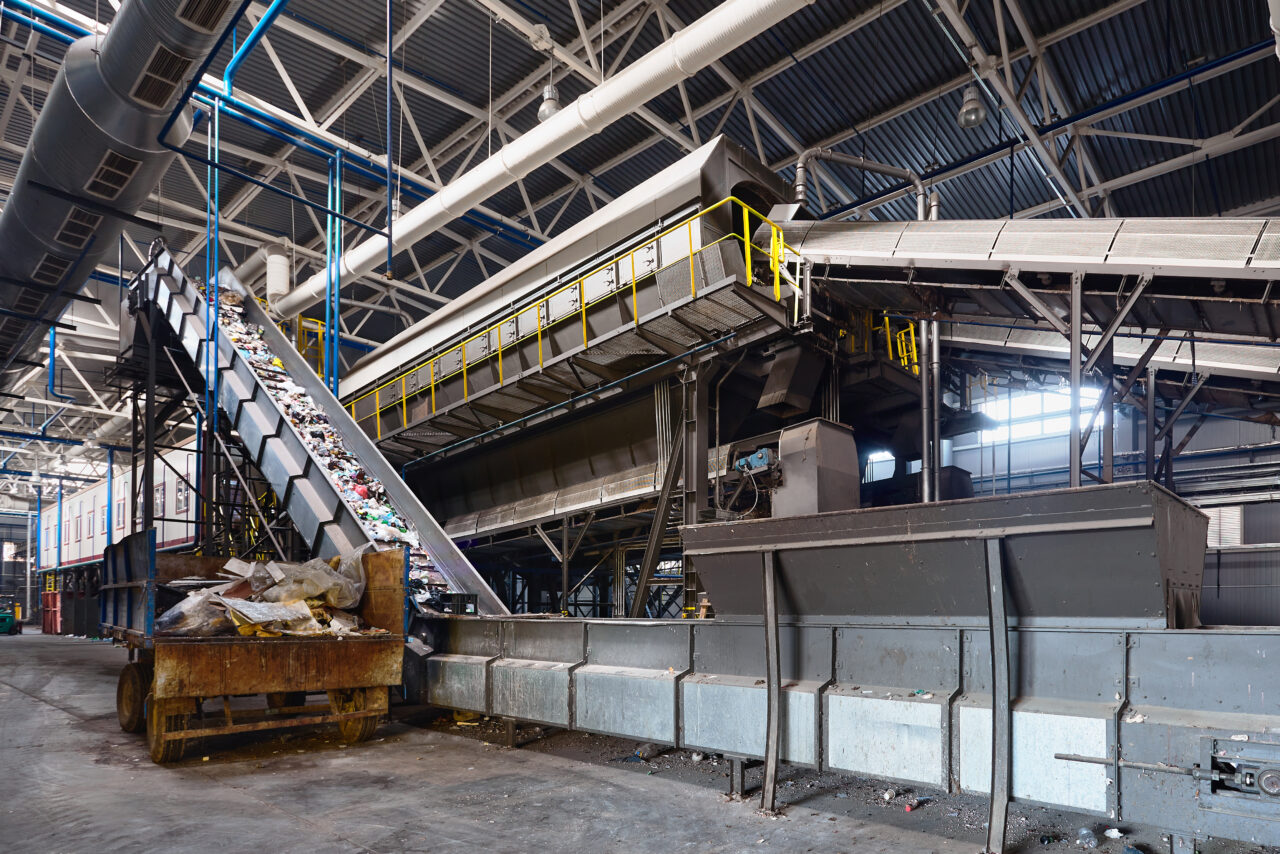
Conveyors that need a high ratio and a low output speed
With the backstop option, so the load cannot run back when the drive stops
Machines that need a low output speed from one worm stage
Hung on the driven shaft with the hollow output and a torque arm
Drives that must stop and hold, with a brake or double brake motor
Sizing a conveyor drive? Our guide to conveyor torque covers the figures we will ask you for.
Can’t find it?
Send us the type code from the nameplate, or your torque and speed, and we will send the right drawing.
Replacing a gearbox
Every IRS carries a nameplate. Send us its details, with a few photos, and we will match the replacement.
An IRS type code starts with the series, mounting and input, such as IRSAM, then the housing size, such as 65, and the motor, such as 80 M 4. Any options follow a slash.
The type code, ratio, motor power and serial number from the nameplate, photos of the nameplate, shafts and mounting, and what the gearbox drives.
Tell us how the unit is mounted and which way up, using I-MAK’s positions P1 to P6 or V1 to V6. The mounting position sets the oil quantity.
We can often replace a gearbox from another maker with an I-MAK unit. Send us the nameplate, shaft and mounting details and we will check the fit.
Ask us for I-MAK spares such as seals and bearings; the parts lists in the catalogue help identify them. Need a repair rather than a replacement? Call us and we will talk it through.
Type code
Related products
Helical worm
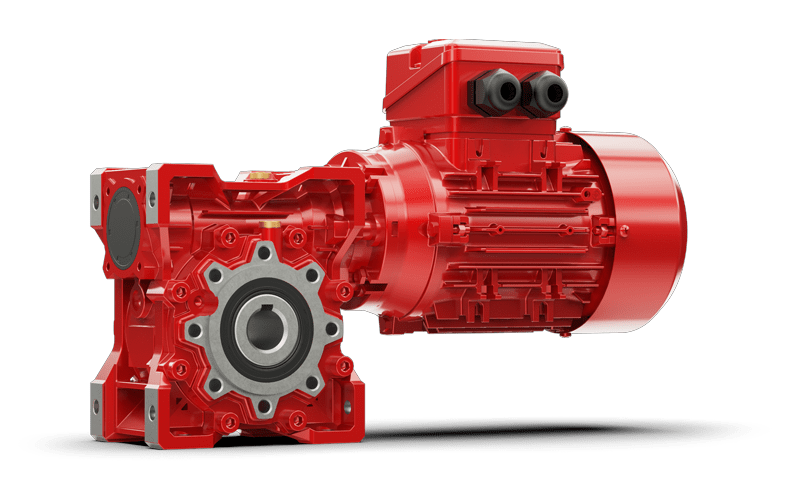
A helical stage ahead of the worm, for ratios up to 499:1.
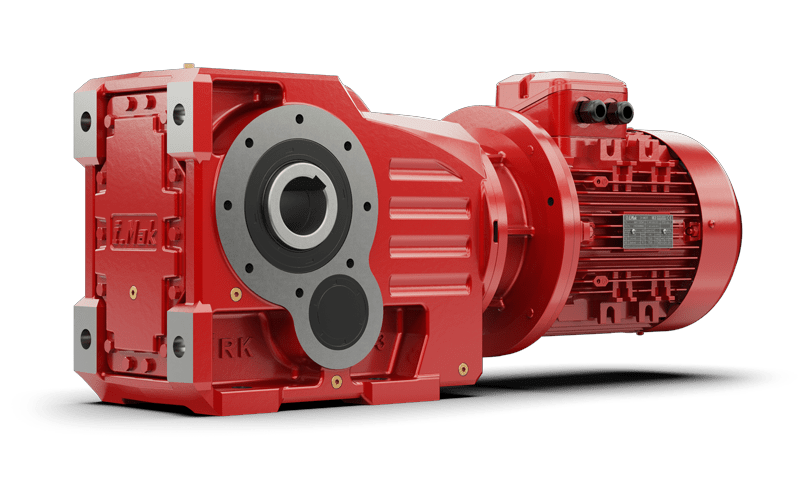
Helical bevel
A right-angle drive with hardened, ground gears, up to 18,000 Nm.
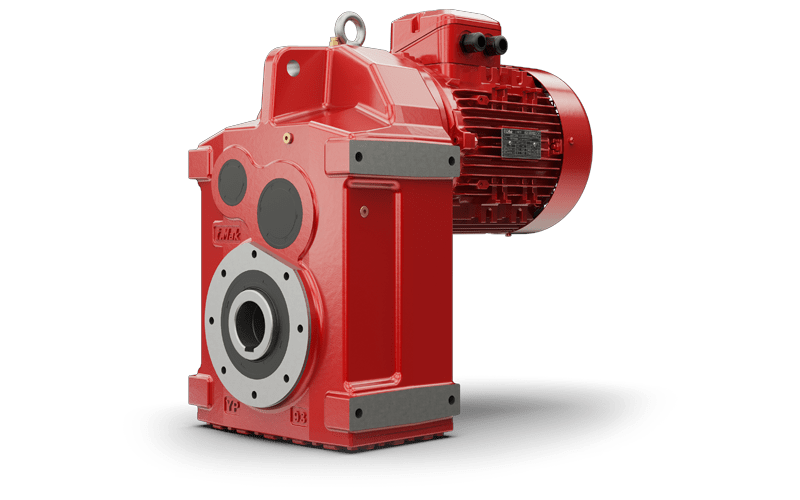
Parallel shaft
A compact parallel shaft unit, with a hollow output shaft as standard.
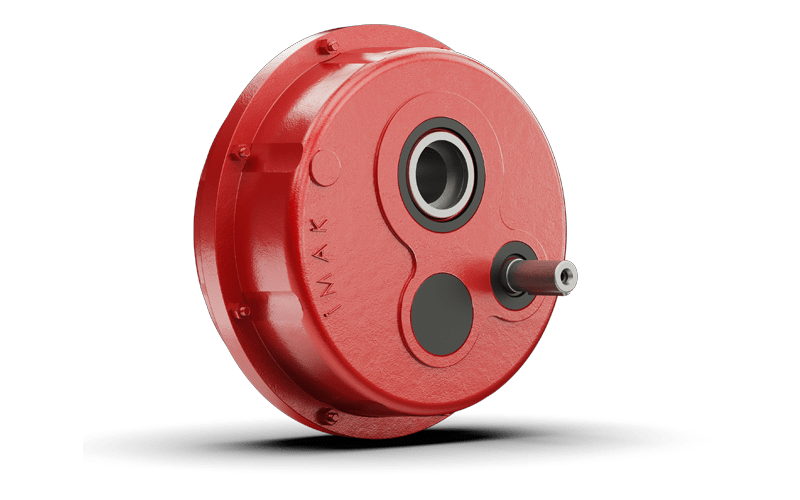
Shaft mounted
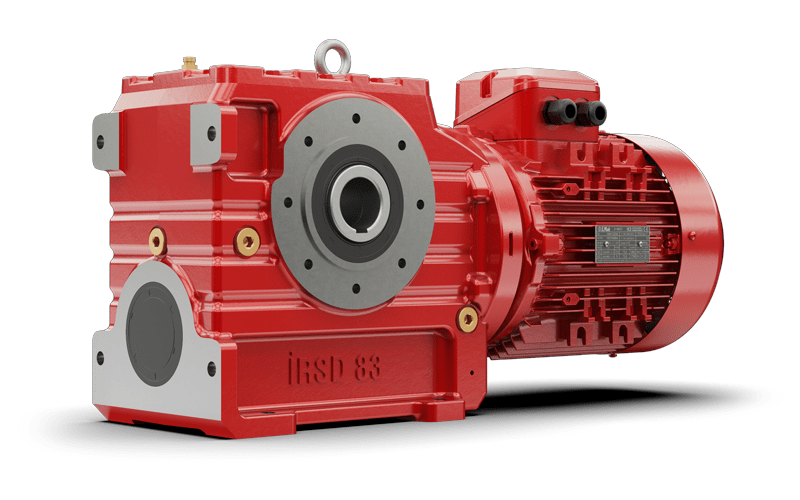
Hung on the driven shaft, with a backstop option for inclined conveyors.
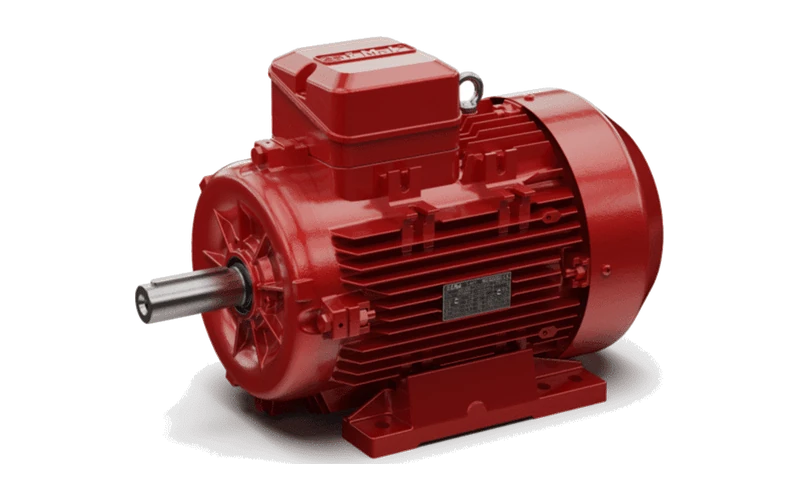
Motors
IEC frame motors from 0.12 to 450 kW, in 2, 4, 6 and 8 pole versions.
Let’s find your gearbox
We just need three details.
Replacing one? Send us the type code from the nameplate and a photo, and we will work from those.
1
Continuous and peak, at the gearbox output shaft.
2
Output rpm or the ratio, and the motor speed if you already have one.
3
Hours per day, starts per hour, and how the unit is mounted.
Prefer us to call you? Request a callback.
A motor and gearbox in which a worm, a threaded shaft, turns a worm wheel set at 90 degrees to it. One worm stage gives a high ratio, so the output turns slowly from a standard motor.
Eight housing sizes cover rated output torques up to 10,562 Nm at 1,400 rpm input, and 13,226 Nm at 900 rpm, at a service factor of 1. The right size depends on your duty, so tell us the load, hours per day and starts per hour and we will check it.
Do not rely on the worm gearing for that. I-MAK does not publish self-locking data for the IRS, so where the load must not run back, use the backstop option, a motor brake, or both.
I-MAK’s tables give the efficiency for each IRS ratio: from 54 to 89% at 1,400 rpm input, highest at the lower ratios. Tell us the ratio you need and we will give you the figure, so the motor can be sized correctly.
A CLP gear oil, mineral or synthetic, with the grade chosen for the operating temperature; food-compatible and low temperature oils are options. Change it after the first 500 hours, then every 6,000 operating hours.
Often, yes. Send us the nameplate details, the shaft and mounting dimensions, and photos, and we will check whether an IRS fits as a drop-in replacement.
Our experienced engineers are here to help, no matter what stage you're at. Even if you don't know where to start, we're happy to assist with any project, big or small.